

In 2026, writing norms have shifted, and AI tools now play a bigger role in the process. As a writer and reader, I like to read real content with genuine information rather than manipulated content. Claude AI has helped me to create creative writing drafts every time. But it’s difficult to say which Claude AI model is best for creative writing.
For the best experience, I have used the top four Claude models and learned which are best, why, and how I can benefit from them. Read the article for my opinion on Claude AI models.
Table of Contents
My Top Claude Model For Creative Writing
After searching a lot, I have found that Anthropic has introduced many Claude models, but out of them, I have found 4 that are helpful in creative writing. Those are Claude Opus 5, Claude Sonnet 5, Claude Sonnet 4.6, and Claude Haiku 4.5.
Claude Opus 5 (best for long-form writing)
When understanding complex subjects or code, other chatbots like ChatGPT or Gemini couldn’t provide authentic results. To make it easier for writers, Claude AI introduces a high-capability AI model, Claude Opus 5, for multiple tasks.
It has a long context window, which allows the model to break complex subjects into simpler parts and prepare long outputs. Writers who love writing novels, especially long-form storytelling, can choose Claude Opus 5 as their best writing Claude model.
Claude Sonnet 5 (best for blog, article, everyday writing)
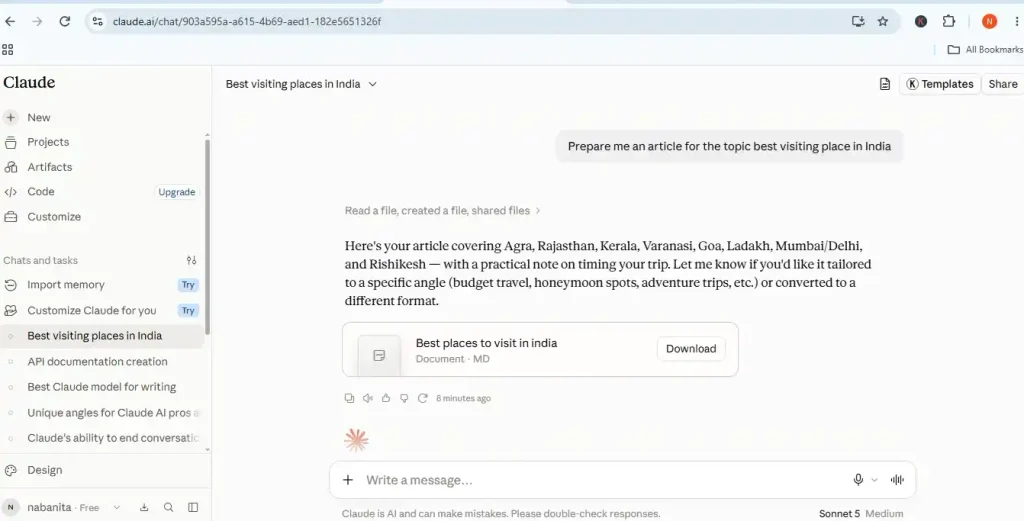
If you are a long-form writer, Opus 5 is perfect for you. As I always like to write blogs and articles, I would like to prefer Sonnet 5. Claude Sonnet 5’s advanced and professional features are very favourable for drafting blogs or articles with a professional touch. It draws on real facts and thorough research, which makes your write-up more likely to rank well.
Claude Sonnet 4.6 (best for writing and editing)
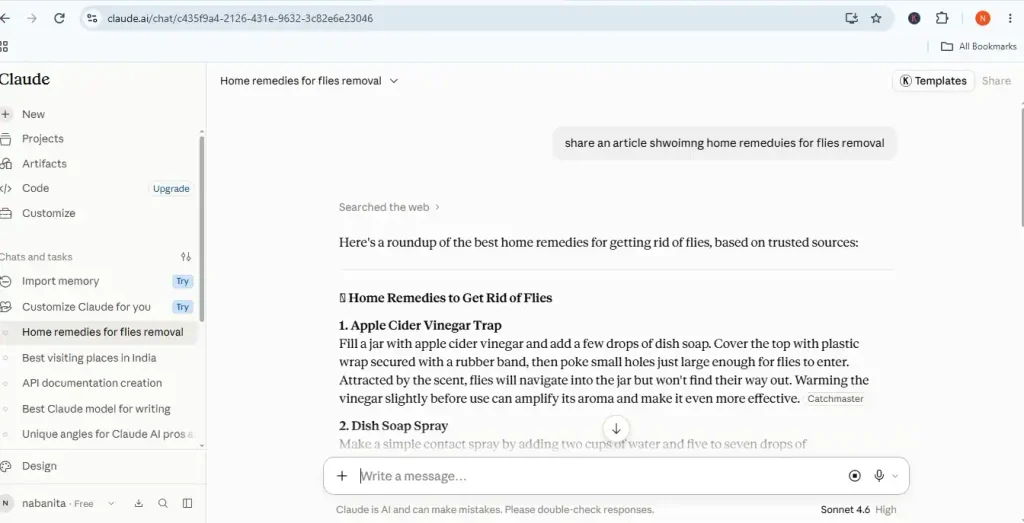
Apart from Sonnet 5, Claude’s other models are also available for basic editing and writing. Sonnet 4.6 offers features that help to prepare a view of simple creative writing and editing. With this model, you can develop your basic ideas for writing and draft papers.
Claude Haiku 4.5 (best for short, simple writing)
Out of the 4 models, Claude Haiku 4.5 is useful for any short and simple writing. Whether you are trying to draft an application or write an email to your best supporter, Haiku 4.5 is best. This Claude model can help you write clear, concise messages, emails, or short-form content.
How do Claude Models Improve Writing?
It is good to have a habit of writing, but it is also important to maintain a basic quality to engage readers with your words. We usually ask for suggestions and use ChatGPT or Gemini to solve our queries, or sometime asked then tio prepare the writing on our behalf. Is it really helpful for writing?
The answer is no. Because ChatGPT or Gemini do not improve your ability of thinking or improve your ideas to make an engaging written sample. On the other hand, Claude models are built to actively help writers improve, not just generate text for them.
1. Improves the language scale
Language is the core element of writing. When you use simple and engaging language in your content, it becomes more engaging and high-quality. Claude, in this case, understands the target audience and is trained on vast text across different styles and domains. Like it provides specifications in,
- Good grammar
- Sentence rhythm and readability
- Single tone and expertise choice
2. Focuses on Contextual analysis
Claude not only focuses on grammar checking. Rather, it reads the writing context so that it can understand the core point of the writing. It also analyses,
- When the passive voice is essential
- Understands the intended tone and provides suggestions accordingly
- It can tell the difference when a fragment is on purpose.
- It also knows when it is really a mistake.
3. Provides feedback on work
Claude’s models not only generate writing, but also it providex the feedback, which can help improve writing skills professionally. The feedback includes,
- Whether the sample provides clarity or not
- Whether there are any redundant words present or not
- Does the logic flow from one idea to the next?
- Is the writing engaging and appropriately varied?
- Does the voice match the audience and purpose?
All these suggestions are important to prepare a high-quality writing sample.
4. Follows instructions
While preparing any write-up, some models generate output based only on pattern-matching, without real understanding. But Claude models usually follow the given instructions and prepare the output according to the instructions.
- “Shorten this but don’t remove the technical detail”
- “Make it warmer without making it unprofessional”
- “Fix the structure but preserve my voice”
5. Adapts styles
Claude models have a special method through which they can adapt to any kind of writing styles, whether. It means it learns your writing style through conversation and provides you with suggestions as per your recommendations. Like,
- If you want academic writing, it will show you suggestions regarding that
- Follow a formal or casual writing style
- Domain-specific language such as marketing, legal, medical, etc.
Read more: Pros and Cons of Claude AI.
Conclusion
Claude has a variety of models, and each is different from one another in terms of features. As a creative writer, I can suggest that the above four are also different models of Claude. But it’s difficult to say which one is best for creative writing. In my experience, all the Claude models are equally essential for improving writing ability. However, Claude Sonnet 5 is one of the best Claude models, as it helps with blogs, articles, and everyday writing.
FAQs
When should I use Claude Opus vs Sonnet?
Use Claude Sonnet as your everyday default for routine work, and reserve Claude Opus for complex, high-stakes reasoning tasks.
Which Claude model is best for writing fiction?
Claude Opus is widely regarded as the single best model for writing fiction.
Which Claude model is most creative?
The title of most creative model in the Claude family comes down to Claude 3.7 Sonnet and Claude 3 Opus, depending on how you define creativity.
Which Claude should I use for writing?
The best Claude model for writing depends on the type of content and the depth of style, nuance, or structure required.
Which is better for writing, Claude Sonnet or Opus?
Opus is better for fiction, voice, and stylistic depth, while Sonnet is better for structured, professional, and fast-paced editing.
How to use Claude for creative writing?
Using Claude effectively for creative writing comes down to guiding its prose away from generic AI tropes and treating the model as a collaborative drafting partner rather than an automatic “finish my book” button.
Which AI model is best for creative writing?
Across major frontier LLMs, the consensus among authors and creative writers points to Anthropic’s Claude models (specifically Claude 3 Opus and Claude 3.7 Sonnet) as the overall best for creative writing.