
AI video generation is growing faster to improve social media posts, create attractive content, and support social media marketing. AI tools save time and produce videos efficiently, but they still need human input. In this Ainewsjournal article, I am going to discuss 10 major limitations of AI in Content Creation that I have discovered during my workflow.
What Is AI Video Technology?
Before learning about the limitations, it is important to know what this technology is and why it creates the limitations.
AI video generative tools use artificial intelligence technology that works on given prompts, images, text, and commands. These videos are used for social media content, brand campaigns, and social ads. As this technology is driven by AI, there still need human editing to make it realistic and prevent copyright issues.
10 Major AI Video Troubleshooting
1. Inconsistent Realism and the “Uncanny” Look
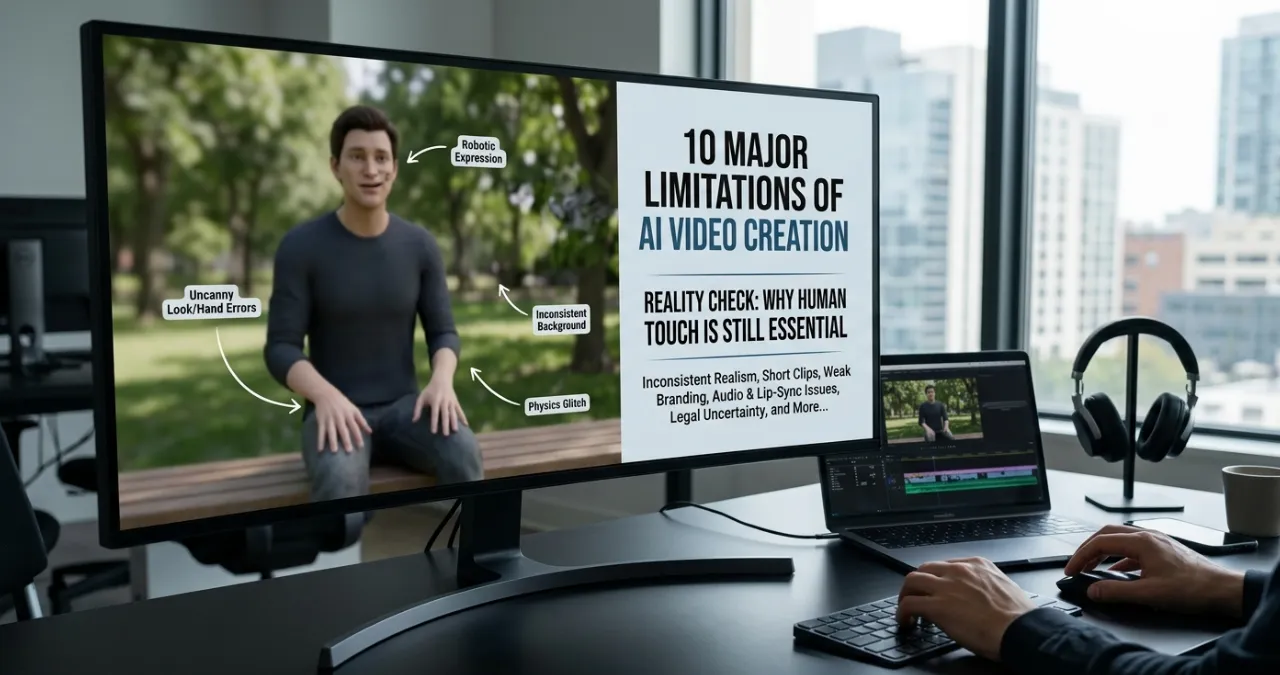
After generating the video through AI video generation, I have noticed that there is a misorganisation in the look. While making the characters, it ignores the proper shape of hands, fingers, and faces, which can be caught in a close-up and make a negative impression on social media.
Also, the expressions feel robotic, and there is a major lack of awareness when objects float, merge, or move in ways that don’t make sense. AI video problems are seen when people go through those posts and notice them first before reading the whole content.
2. Short Clip Lengths and Limited Scene Control
Generally, these AI generative tools produce videos within a selected time. If you want a longer video, they won’t be able to create it properly, which is a big error in videos generated by AI tools. Producing a longer, coherent video usually means generating many separate clips and stitching them together. That brings its own problems, like characters and settings sometimes looking different; camera angles and lighting are also seen differently.
3. Weak Character and Brand Consistency
The social media posts are very sensitive, as they are viewed by many viewers from every angle. Mostly in the ad videos or brand campaigns, viewers are attracted by their captions, tags, logos, characters, packaging, and colours. AI videos are generated by AI tools, which misspell the text or the caption. These issues in AI video generation create misunderstandings in social media marketing and impact product branding.
4. Poor Handling of Text, Captions, and Logos
AI-generated video often produces garbled, misspelled, or shifting text when words appear on screen: signs, product labels, headlines, or subtitles. Many creators end up adding all text manually in a separate editor, which defeats part of the time-saving promises.
5. Audio, Voice, and Lip-Sync Problems
In social media posts, the videos should be attractive and flawless. AI tools make videos that incorporate mismatches in audio, voice, sound effects, and lip-syncing. This decreases the quality of the videos and the authority as well. These are the most common changes that are noticed in every video, which is language errors.
6. Lack of Authentic Emotion and Human Connection
As these videos are produced by AI tools, it is very common that they can make mistakes. The viewers or audiences are attached to their creators or their products. Creating authentic human emotions, reactions, or personal stories is really a hard task for these AI tools and needs human editing. When it cannot be achieved by these tools, then it becomes a serious AI video creation error.
7. Copyright, Ownership, and Legal Uncertainty
Social media moves quickly, and AI tools don’t naturally understand fast-changing trends, memes, slang, or cultural context. They may:
- Miss or misuse a trending format or sound
- Produce content that feels dated by the time it’s posted
- Misread cultural nuances, symbols, or humor, risking offensive or tone-deaf content
A human creator who lives on the platform will usually spot these things far better.
8. Bias and Stereotyping in Generated Content
AI in these video editing tools depends on the existing data that is globally available. Whatever it produces is a reproduction of existing data, nothing new. So, we need to recheck or cross-check every element and every part before publishing it on social media. This is an AI video creation challenge that most of us can face.
9. Privacy and Data Concerns
Uploading images, scripts, product designs, or voice recordings to an AI platform raises questions about how that data is stored and used. Businesses handling sensitive or unreleased material should review privacy policies before uploading anything.
10. Limited Originality and Sameness
After using AI tools for making videos for social media posts, I have noticed it started to offer the same types of suggestions every time. Each suggestion is similar to another one. This is a big error in AI video creation. As many people use the same kinds of prompts every time, AI has detected the same pattern and provides suggestions that are similar to its previous version.
How To Fix These AI Video Creation Errors?
The above AI video creation errors can create a massive mistake for social media marketing, brand campaigns, and social media. Here are some of my short tips to follow in each attempt,
- Avoid giving prompts; rather, use a prepared script for creating videos
- Assemble each character in your mind as per their position, then apply
- Make a habit of reviewing the given instructions before creating the final video
- Write in order and specific prompts
Conclusion
AI video generation tools are fine, helpful, and a new generation of technology that makes our work faster. But with these facilities, it also comes with some difficulties. Make sure you identify the errors before final publishing or try to follow my tips so that you can make error-free video content.
FAQs
Can AI replace human video creators on social media?
Not fully. AI helps with speed and drafts, but it still lacks authenticity, consistency, and creative judgment.
Why do AI-generated videos look fake?
Models often struggle with physics, faces, hands, and frame-to-frame consistency.
Is AI-generated video safe for commercial use?
It depends on the tool’s license terms and your local copyright laws, so check both before publishing.